
Medicine is full of acronyms…
- PNA
- HTN
- PCN
- RARLP
- LOL
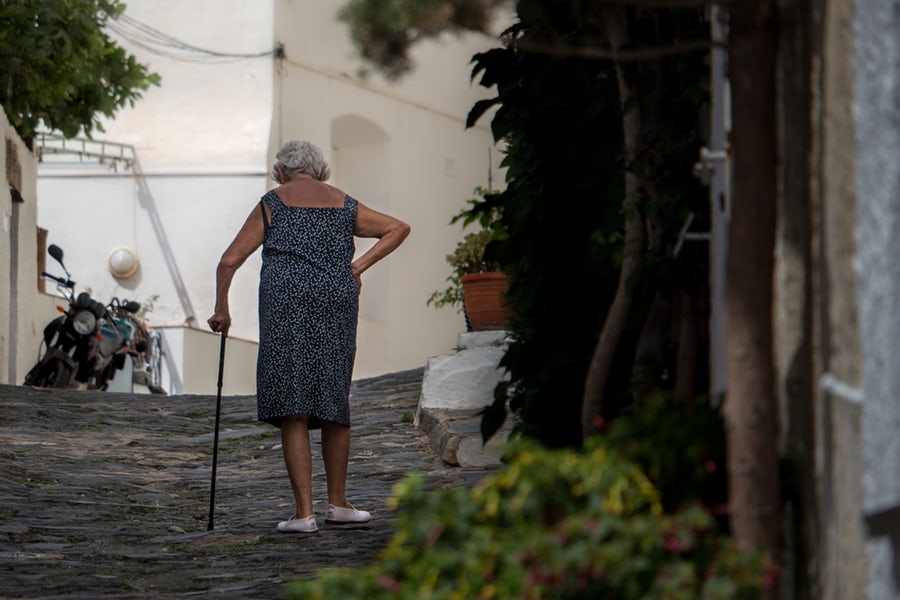
That last one is not what you think it is, it actually stands for “little old lady”. So… maybe that’s not a standard medical acronym, but fits with the story I’m planning to tell *shrug*
Family medicine is unique in that we get to treat all ages, “cradle to the grave”. It is very possible to witness the miracle of new life AND have an end of life discussion all in the same day. That’s the beauty of family medicine (I know I’m so biased).
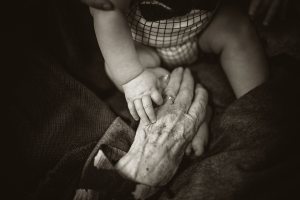
Today’s story is about a sweet elderly lady.
***Again, I have to be careful what and how much I share due to the privacy rules and regulations so I apologize for leaving out details***
A small frame, trembling voice, and precious soul. She’s afraid of the unknown, like most of us. Her story is scattered and she trails off often. Is she a poor historian or does she really not understand what, how, and when things changed? All she knows is her body is different, not right, and she had an abnormal scan. She begs for answers and prays for healing.
I met this woman in the emergency department. It was a typical day, the ED was busy and full; everything from stubbed toes to strokes. The pager blares and I grudgingly make my way down to the ED, 2 hours away from the end of my 24 hour call shift. I search for the patient I was called down to see and can’t find her, assuming she got frustrated and left I find a computer to check if there’s a note from the ED staff documenting the patient’s departure. Fortunately I discover I was given the wrong location of the patient, I search a bit more and find her. She’s on a stretcher near one of the exits, behind a wall…she was practically hidden.
Fast forward a few days, still insufficient answers. More blood tests, scans, and specialists. The pager blares again, but this time it isn’t the ED.
“Can we get something for anxiety? She’s having a panic attack.”
Let’s pause for a moment. There are many ways to respond to this request. I don’t know that there’s one correct way, but there are many incorrect ways. If you’re in healthcare you may balk at how I responded or you may think I’m lying for the sake of the story.
I told the nurse that I would place an order for a medication to help with the patient’s anxiety, but I also decided to go see what exactly she was anxious about. This was a lady without a history of anxiety. Also, I had spoken to her less than 2 hours ago about the results of her recent imaging and she hadn’t been one bit anxious. I wanted to know what had changed? We’re taught to reassess a patient’s condition when something changes and I wholeheartedly believe that also applies when there is a change in the mood. We perform serial abdominal exams when we’re concerned for an acute abdomen or appendicitis, and serial neurological exams if a person has had a stroke. Why not reassess if there’s a drastic mood change?

It took maybe 15 minutes out of my day to walk to her room, sit down, and listen. I found out she was anxious because one of the specialists had mentioned the possibility of a biopsy, a completely legit reason to be a little anxious. The lesson comes in what happened next.
I didn’t talk science, medicine, risks, and benefits to her. I sat on the side of her bed and held her hand. I let her fumble her words as she tried to express herself. Guess what happened next? She felt better and her anxiety resolved. I held her hand, listened, and reassured her that our team was working diligently for an answer. At the end of our 15 minutes together, she squeezed my hand and thanked me over and over.
I’m annoyed that our [American] culture discourages us from talking about and working through problems. We would rather ignore, deny, and take a pill. Sure, I could have sat at a computer, written an order for the nurse to give “medication as needed for anxiety”, then kicked my feet up and relaxed until it was time to clock out. It would have saved my “precious” time, some steps, and maybe I would have gotten home earlier? But would it have been what was best for the patient? The modern Hippocratic oath, which is more a tradition and right of passage than a binding code goes as follows:
I swear to fulfill, to the best of my ability and judgment, this covenant:
I will respect the hard-won scientific gains of those physicians in whose steps I walk, and gladly share such knowledge as is mine with those who are to follow;
I will apply, for the benefit of the sick, all measures which are required, avoiding those twin traps of overtreatment and therapeutic nihilism.
I will remember that there is art to medicine as well as science, and that warmth, sympathy and understanding may outweigh the surgeon’s knife or the chemist’s drug.
I will not be ashamed to say “I know not,” nor will I fail to call in my colleagues when the skills of another are needed for a patient’s recovery.
I will respect the privacy of my patients, for their problems are not disclosed to me that the world may know. Most especially must I tread with care in matters of life and death. If it is given me to save a life, all thanks. But it may also be within my power to take a life; this awesome responsibility must be faced with great humbleness and awareness of my own frailty. Above all, I must not play at God.
I will remember that I do not treat a fever chart, a cancerous growth, but a sick human being, whose illness may affect the person’s family and economic stability. My responsibility includes these related problems, if I am to care adequately for the sick.
I will prevent disease whenever I can, for prevention is preferable to cure.
I will remember that I remain a member of society, with special obligations to all my fellow human beings, those sound of mind and body, as well as the infirm.
If I do not violate this oath, may I enjoy life and art, respected while I live and remembered with affection hereafter. May I always act so as to preserve the finest traditions of my calling and may I long experience the joy of healing those who seek my help.
[http://www.aapsonline.org/ethics/oaths.htm]
This precious woman who has seen many years come and go, didn’t need yet another doctor in that moment. She needed an ear that would listen. Off went the physician hat and on went the young woman listening to her elder speak. Her voice trembled as she expressed her fears, but at the end she still gave thanks to God. She thanked God for the many years she had seen, the health of her children, and the promise that He was with her always. She even thanked God for those taking care of her in the hospital. This lady who didn’t have answers as to why she was in so much pain and why she couldn’t walk as she used to, had the audacity to thank God in spite of her current situation!? Oh to have the faith of this lady and the ability to thank God when I have no idea what my future holds! In that moment, I was just a young woman basking in the glow of this woman of mighty faith.
I pray God grants her healing and full recovery. However, I don’t think it presumptuous to believe that if God has other plans for this woman’s life, she’ll praise Him regardless. There’s lesson number 2: Trusting and praising God regardless of the circumstances or the outlook.
I’ll end with this…
I really enjoy old people, my favorite patients are usually either less than 6 or older than 65 years old. They just see life differently than the rest of us! I believe I have always had a special place in my heart for old people, but since my grandmother’s passing that special place has grown larger. I often find myself comparing the old people I meet to my grandma. The lady I spoke of earlier reminds me so much of her, because of her faith. My grandmother’s faith was always a constant, even during her final days. “Pray for me and I pray for you” was usually how she ended the conversation before hanging up the phone. My grandmother was something else, but that’s a story for a different time.
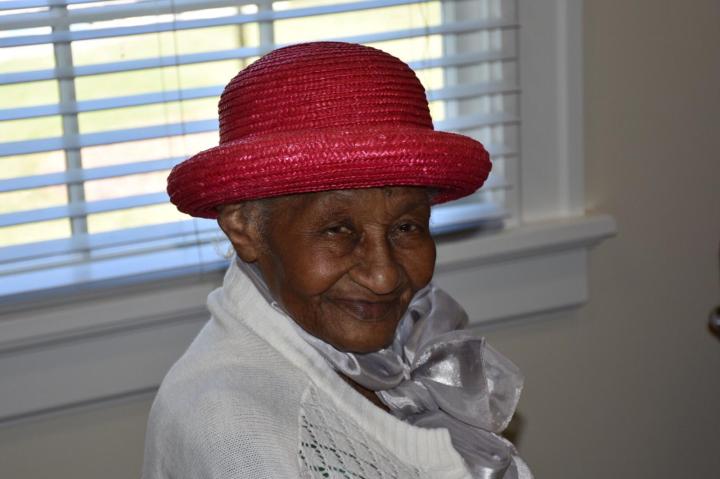
Today was for the lady with the small frame, trembling voice, and precious soul. Thank you for the lessons you taught me:
Medicine is not always the answer.
You don’t need to know everything about the present to trust God with the future.
 Midnight Medicine Musings